How to Obtain a Turkish Tax Number (Simple Guide)
Getting a Turkish Tax Number is quick and free. To apply, go to any local tax office with your original passport and a photocopy of your passport. Fill out the application form, and your number is issued immediately.
You can also apply online through the Turkish Revenue Administration website and download your tax number within minutes.
Is there a fee to get a Turkish Tax Number?
No. Obtaining a Turkish Tax Number is completely free.
How long does it take?
Most applications are completed in 15–30 minutes.
1. What Is a Turkish Tax Number and Why Is It Important?
A Turkish Tax Number, or “Vergi Kimlik Numarası” in Turkish, is a unique identifier assigned to individuals and entities engaging in financial and legal transactions within Turkey. For foreigners, the Turkish Tax Number is not just a bureaucratic formality, it is a gateway to navigating Turkey’s economic and legal systems. From opening a bank account to purchasing property or establishing a company, this number is an indispensable requirement.
Unlike in many countries, the Turkish Tax Number is not solely for tax-paying individuals or businesses. It extends its relevance to foreigners, whether they are short-term visitors planning to invest in real estate, long-term residents, or entrepreneurs establishing a foothold in Turkey’s growing economy. Even if a foreigner does not owe taxes in Turkey, they still need a tax number to perform essential transactions.
2. Tax Number vs. Tax Registration: What’s the Difference?
Many foreigners use “tax number” and “tax registration” interchangeably, but in Turkey they refer to two distinct things and confusing them is one of the most common reasons people apply for the wrong process.
A Turkish Tax Number is simply an identifier. It’s the 10-digit number (or, for those who hold a Turkish ID, their 11-digit TCKN) that lets you be recognized in Turkey’s financial and legal systems. Getting one doesn’t create any ongoing obligations, you don’t need to file returns, keep records, or report income just because you hold a tax number. It’s free, takes minutes, and functions like a reference key rather than a status.
Tax registration is a different, heavier process. This is what happens when you or your company become an active taxpayer in Turkey: someone who owes and files taxes on an ongoing basis. This applies if you’re opening a company, working as a freelancer under the Turkish system, or otherwise generating taxable income in Turkey. Tax registration requires a declared business address, is tied to a specific tax office based on that address, and comes with recurring obligations such as periodic tax filings, bookkeeping, and potentially VAT registration. Unlike a simple tax number, this process is usually handled with the help of an accountant, since ongoing compliance is involved.
In practice, here’s how to tell which one you need:
- If you’re buying property, opening a personal bank account, or need a number for identification purposes only → you need a Turkish Tax Number.
- If you’re starting a company, becoming self-employed in Turkey, or will be invoicing clients and paying tax on income earned in Turkey → you need full tax registration, not just a tax number.
3. What Does a Turkish Tax Number Look Like? (Format & Terminology)
If you’ve seen different terms thrown around such as VKN, TIN, TCKN, YKN it’s not a mistake; they refer to related but distinct numbers, and knowing which one applies to you will save confusion later.
VKN (Vergi Kimlik Numarası) is the standalone Turkish Tax Number issued to foreigners who don’t hold Turkish citizenship or a Turkish ID. It’s a 10-digit number, generated randomly and not tied to any personal identity number. This is the number most foreigners applying for a bank account, property purchase, or tax number for the first time will receive.
TCKN (T.C. Kimlik Numarası) is the 11-digit Turkish Citizenship/ID Number assigned to Turkish citizens.
YKN (Foreigner Identity Number): Also known as the Foreigner Identity Number, this is an identification number assigned by the Turkish authorities to foreign nationals who have obtained a residence permit, acquired immovable property in Türkiye, or have been issued one due to specific legal or administrative needs under special circumstances.
TIN (Tax Identification Number) is simply the international/English-language term for the same concept. When foreigners search “TIN number Turkey,” they’re generally looking for the VKN, it’s not a separate registration.
4. Who Needs a Turkish Tax Number?
Foreigners in Turkey
Foreigners in Turkey are among the key groups required to obtain a Turkish Tax Number due to its importance in a variety of financial and legal activities. Whether a foreigner is in Turkey for short-term purposes like tourism or long-term goals such as investment or residency, a Turkish Tax Number becomes an essential tool for navigating the country’s systems and opportunities.
One of the most common reasons a foreigner might need a Turkish Tax Number is to open a bank account. Turkey’s financial institutions require this number to ensure proper identification and compliance with regulatory standards. Having a local bank account is often necessary for foreigners, especially if they plan to receive payments, make transactions in Turkish Lira, or establish a business presence.
If you’re ready to take that step, our full guide on how to open a bank account in Turkey as a foreigner covers everything from required documents to choosing the right bank.
For foreigners looking to purchase property in Turkey, a Turkish Tax Number is indispensable. It is a prerequisite for signing property contracts and paying necessary taxes. Without this number, a foreign buyer cannot complete the legal formalities required to acquire real estate, a popular investment option given Turkey’s strategic location and vibrant property market.
If you’re ready to move forward with a purchase, our step-by-step guide on how to buy property in Turkey as a foreigner walks you through the entire process, from the tax number stage to the final TAPU transfer.
Foreign entrepreneurs planning to set up a company in Turkey also need a Turkish Tax Number. This applies not only to the business entity itself but also to the individuals involved, including the owners and legal representatives. A tax number facilitates interactions with tax authorities, the preparation of financial statements, and compliance with Turkey’s corporate laws.
By obtaining a Turkish Tax Number, foreigners can unlock opportunities and avoid unnecessary delays or complications, ensuring a smoother integration into Turkey’s economic and legal framework.
5. Pre-Application Requirements
Before applying for a Turkish Tax Number, it is crucial for foreigners to understand the pre-application requirements to ensure a smooth and hassle-free process. Having all the necessary documents and information prepared in advance can save significant time and prevent delays caused by incomplete submissions.
Here are the key pre-application requirements for obtaining a Turkish Tax Number:
1. Valid Passport
- A passport is the most critical identification document required. Foreigners must ensure that their passport is valid and not expired, as it will be used to verify their identity during the application process.
- Important Note: If you are applying for a Turkish Tax Identification Number while you are outside Türkiye, you must have previously entered Türkiye using your current passport.
2. Copy of the Passport’s Photo and Information Page
- Foreigners are often required to provide a clear photocopy of the page displaying their photograph, full name, and passport number.
3. Contact Information
- Applicants must provide a working phone number and email address. This information is used for communication and to send notifications related to the tax number application.
4. Translation of Documents (if required)
- Some tax offices may require official translations of documents like the passport. It’s advisable to verify this requirement in advance to avoid last-minute complications.
5. Power of Attorney
- You can also complete this application by providing a power of attorney to a lawyer. Also, sometimes when you have problems with online application, you can complete the application physically by giving a power of attorney to a lawyer.
Preparing these documents in advance not only expedites the application process but also reduces the chances of rejection or the need for repeat visits to the tax office.
6. Where and How to Apply for a Turkish Tax Number
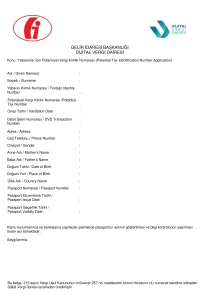
Getting a Turkish Tax Number is a simple procedure. You can apply at any tax office or online. The only documents required are your original passport and a copy of your passport, and registration is free of charge.
In most cases, you receive your tax number on the same day, usually within 15–30 minutes.
Foreigners can obtain a Turkish Tax Number in two ways: (1) by visiting a local tax office, or (2) by completing the online application through the Turkish Revenue Administration website.
Application at Tax Offices
When applying at a tax office, it’s essential to arrive prepared with all required documents. Applicants will need:
- A valid passport and a photocopy of the passport.
- Contact details such as a phone number and email address.
Once at the office, applicants should proceed to the relevant desk and inform the staff they wish to apply for a tax number. Tax office staff may not always speak fluent English, so you may have problems with the language.
Insider Tip: If you give a power of attorney to a lawyer, he can complete all these transactions on your behalf without any problems.
Online Application Process
For tech-savvy foreigners or those who wish to avoid in-person visits, the Turkish Revenue Administration offers an online application system. This option is particularly convenient for individuals residing outside major cities or those unable to visit a tax office during working hours.
To apply online:
- Visit the official website of the Turkish Revenue Administration through here.
- Navigate to the section for foreigners applying for a Turkish Tax Number.
- Complete the online form, ensuring accurate input of details such as name, passport number, and contact information.
- Submit the form and await confirmation.
After submitting the form, your Turkish Tax Number is generated instantly and can be saved or printed.
Applicants will usually receive their tax number through the website. However, the online system can occasionally experience technical issues, such as timeouts or language inconsistencies. It’s recommended to double-check all entered information to prevent delays.
Unique Considerations for Foreigners
- Tax Office vs. Online: While the online system is convenient, sometimes it can cause problems, leading it not giving a tax identification number, in such cases, the tax identification number must be physically obtained.
- Providing Power of Attorney: You can make this entire process stress-free and easy by granting power of attorney to a lawyer. This way, while you enjoy peace of mind, your matters can be resolved effortlessly.
7. Processing Time and Fees
When applying for a Turkish Tax Number, it’s important for foreigners to be aware of the processing times and any associated fees to manage expectations and plan accordingly. While the process is generally efficient, there are some nuances that can affect how quickly you can obtain your tax number.
Processing Time
In most cases, obtaining a Turkish Tax Number is a quick and straightforward process. If you are applying in person at a tax office, you can typically receive your tax number on the same day. The process usually takes around 30 minutes to an hour, depending on the office’s busyness and whether all your documentation is in order.
For online applications, the process is usually faster. Once the online form is submitted and the details are verified, the tax number is often issued within minutes. However, there may be occasional delays due to system updates or errors, so it’s wise to be prepared for a slight waiting period.
Fees
The good news is that obtaining a Turkish Tax Number is free of charge for individuals, including foreigners. There are no direct fees associated with the application process itself. However, some indirect costs may arise depending on your circumstances. For example, if you require notarized translations of your documents or need a legal representative, these services could involve additional fees.
While the tax number itself is free, be mindful that certain transactions that require the tax number, such as opening a business or purchasing property, may involve various administrative costs and taxes that are separate from the initial application.

8. Common Mistakes and How to Avoid Them
While applying for a Turkish Tax Number is a relatively simple process, there are common mistakes that many foreigners make, which can lead to delays or complications. By being aware of these mistakes and taking proactive steps, you can ensure a smoother application experience.
Issues with Online Application Forms
One of the most frequent issues with the online application process is filling out the form incorrectly. The Turkish Revenue Administration’s online portal requires precise information, and even minor errors in details such as passport numbers, names, or contact information can cause delays or rejection of the application.
Sometimes, the online system does not allow providing a Turkish tax number for certain applications. In such cases, it is necessary to make a physical application.
How to Avoid This: Double-check the form and confirm that all information, especially your passport details, are accurate and consistent with your official documents. If you are unsure, consult a translator or Turkish-speaking contact to assist with form completion. Additionally, you can handle the entire process stress-free by granting power of attorney to a lawyer.
Missing Documents During Application
Another common mistake is not having all required documents ready, leading to incomplete applications. Whether applying in person or online, missing documents such as a passport copy, or contact information can delay the process significantly.
9. Using Your Turkish Tax Number
Once you’ve obtained your Turkish Tax Number, it opens the door to various essential services and legal transactions in Turkey. Many foreigners are unaware of the full scope of how their Turkish Tax Number will be used and its significance in both personal and business-related activities.
Essential Transactions
Your Turkish Tax Number is required for a wide range of activities, such as opening a bank account, purchasing property, or starting a business in Turkey. It is often the first step in establishing your financial identity within the country. For foreigners looking to invest in property, the tax number is essential for the legal purchase process, as it is linked to your identity in Turkey’s real estate registry.
In addition to property transactions, the Turkish Tax Number is also necessary for filing taxes, particularly for those operating a business or working in Turkey.
Business Operations
For those looking to start a business in Turkey, the tax number is crucial. It is required for registering your business with the relevant authorities, opening a corporate bank account, and signing legal contracts. Whether you’re a sole proprietor or part of a larger enterprise, your tax number ensures that your activities are legally recognized and monitored by Turkish authorities.
Keeping Your Tax Number Updated
It’s important to note that your Turkish Tax Number remains valid indefinitely. However, if your contact information or address changes, you must update your details with the tax office to ensure seamless communication with Turkish authorities. Missing this step could lead to complications, especially in official correspondence or in situations like tax filing.
10. FAQs About Turkish Tax Numbers for Foreigners
As foreigners navigate the process of obtaining a Turkish Tax Number, several common questions and concerns often arise. To help clarify any uncertainties, here are some frequently asked questions about Turkish Tax Numbers, focusing on aspects that may not always be covered in traditional resources.
1. Do I need a Turkish Tax Number if I am only visiting Turkey temporarily?
No, you do not need a Turkish Tax Number if you are simply visiting for tourism or short stays without engaging in any business or financial transactions. However, if you plan to purchase property, open a bank account, or start a business, you will need a tax number. Even if you’re just living in Turkey for a few months while working remotely, it’s a good idea to apply for a tax number to facilitate any legal processes that may arise.
2. Can I apply for a Turkish Tax Number without being a Turkish resident?
Yes, foreigners who are not residents in Turkey can still apply for a Turkish Tax Number. This is especially relevant for those engaging in business activities, such as setting up a company, investing, or even making large purchases like real estate. The tax number is used to track all official financial and legal activities in Turkey, regardless of whether you have a permanent or temporary residence.
3. Is my Turkish Tax Number tied to my Turkish residency status?
No, your Turkish Tax Number is separate from your residency status. It is a distinct identification number used for legal and financial purposes, such as tax payments and business operations. A foreigner without Turkish residency can still apply for and use a Turkish Tax Number. The number remains valid indefinitely, even if you change your status or leave Turkey for a period.
4. Can I use my Turkish Tax Number for all types of official processes?
The Turkish Tax Number is indeed versatile and required for many processes, including opening a bank account, registering for social security, filing taxes, and signing contracts. However, it is not used for matters related to Turkish citizenship applications or immigration-related processes such as visa extensions or work permits. For these specific purposes, other documentation and registration processes will be necessary.
5. What should I do if I lose my Turkish Tax Number or forget it?
If you lose your Turkish Tax Number or forget it, you can retrieve it through the Turkish Revenue Administration’s online portal. You will need to provide some identifying details, such as your passport number, and you can access your tax number instantly. Additionally, the tax number is often printed on official documents, including those related to property purchases or business registration, so keeping such documents accessible is useful.
6. How long does a Turkish Tax Number remain valid?
Your Turkish Tax Number remains valid indefinitely. Once issued, there’s no need for re-registration or renewal unless there are changes to your personal details, such as your address or citizenship status. However, keeping your details updated with the Turkish Revenue Administration ensures smooth communication and accurate legal processing.
By addressing these common questions, foreigners can feel more confident navigating the complexities of obtaining and using a Turkish Tax Number. Understanding the purpose and nuances of this number is essential for making informed decisions when engaging in business or legal matters in Turkey.
11. Simplifying the Process of Obtaining a Turkish Tax Number
Obtaining a Turkish Tax Number is a pivotal step for foreigners wishing to engage in legal, financial, or business activities in Turkey. While the process might initially seem complex, it is straightforward when approached with a clear understanding of the requirements and steps involved. For many foreigners, especially those intending to invest, purchase property, or operate businesses in Turkey, this number serves as the key to unlocking a multitude of opportunities.
What is often overlooked, however, is the importance of ensuring that all documents are accurate and ready before application. Small errors, such as a mismatch in name spelling or missing documentation, can delay the process, causing unnecessary stress. Additionally, while many focus on the physical aspects of applying at tax offices, the online application system offers a more convenient alternative that still requires attention to detail.
To simplify the process, foreigners should prepare well in advance, double-check all documents, and remain proactive in maintaining accurate contact information with Turkish authorities. The Turkish Tax Number, though not often discussed in detail, is not just an identifier—it is a critical tool for ensuring compliance with Turkish regulations and accessing various legal services.
By following the outlined steps and avoiding common mistakes, foreigners can navigate the application process efficiently and seamlessly, allowing them to fully benefit from the legal and economic advantages that come with obtaining a Turkish Tax Number. However, to make this process completely stress-free, consulting with an attorney can be invaluable. Our law firm, specializing in foreigner’s law, offers expert support to guide you through the entire procedure, ensuring it is as smooth as possible and providing you with peace of mind.