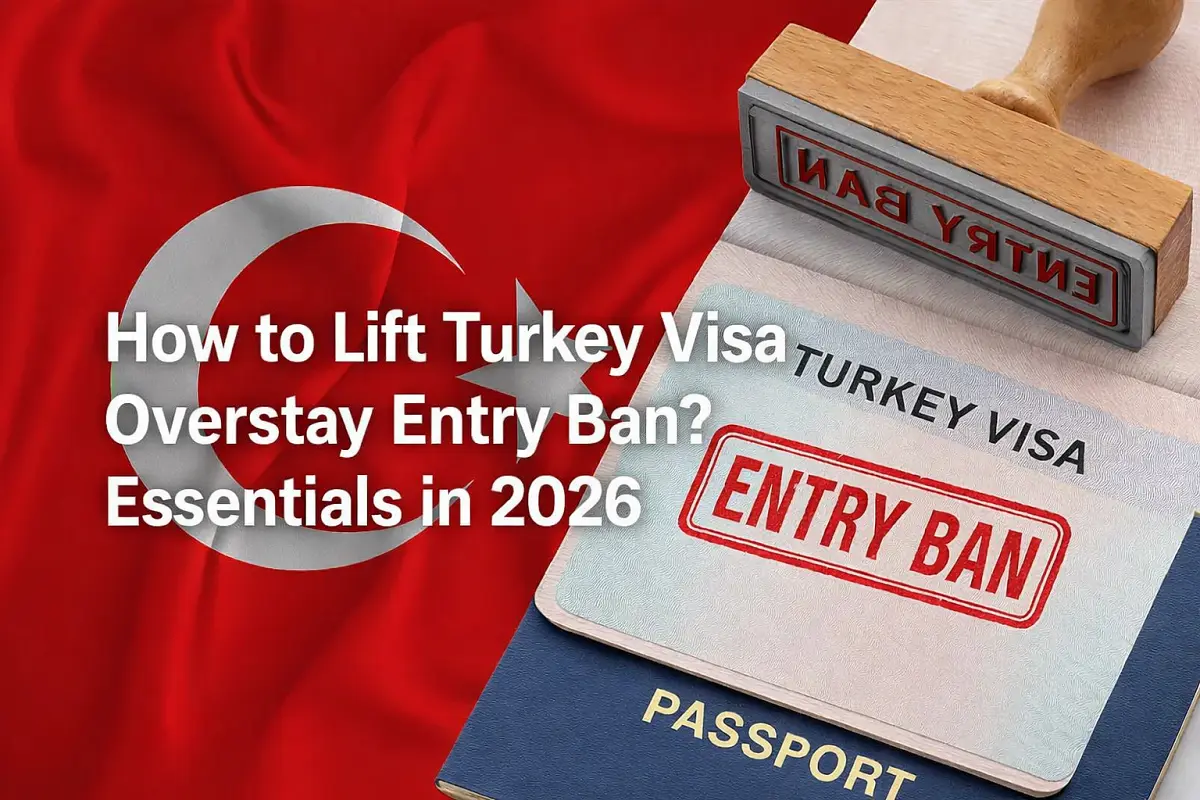
To remove or lift your Turkey visa overstay entry ban after a visa overstay, you may:
- Pay the visa overstay fine at the airport during exit if applicable.
- Consult a Turkey visa overstay lawyer to challenge or shorten the ban based on legal grounds.
- Submit a legal appeal through the administrative court.
In 2026, Turkey maintains a strict immigration enforcement system that imposes severe consequences on foreign nationals who exceed their permitted stay. Whether you’ve overstayed your tourist visa, residence permit, or e-visa, the result is often the same: financial penalties, administrative codes, and temporary or long-term entry bans.
Turkey visa overstay penalties vary based on the duration of unlawful presence. For example, overstaying by just a few days may result in a Turkey overstay fine and a warning, whereas staying beyond 90 days can trigger a Turkey overstay 3 months entry ban or even more. In more serious cases, especially for repeat offenders or those deported, a Turkey visa overstay 1 year ban or even a Turkey overstay 5 year ban may be enforced.
These bans are tied to official entry ban restriction codes in Turkey, most notably Turkey restriction code Ç-101 and Turkey visa ban code Ç-120, which reflect both the reason and length of the prohibition. Many affected individuals are unaware of these until attempting to re-enter Turkey or apply for a visa.
Understanding how long the ban lasts, what triggers it, and most importantly, how to appeal Turkey entry ban decisions after a visa overstay is essential. Overstay cases fall under administrative law, meaning that the solution often involves formal legal action, especially when voluntary exit alone does not resolve the issue.
If you’re wondering what happens if you overstay visa in Turkey, or whether you can simply pay the overstay fine at the airport, the reality is that these answers depend on several factors, including how long you overstayed, whether you left voluntarily, and what kind of visa violation consequences apply in your case.
In this article, we’ll explore the legal solutions, appeal routes, and entry ban durations in detail, helping you understand the Turkey visa overstay legal process and your options to lift the Turkey visa overstay entry ban and return to Turkey lawfully.
1. What Happens If You Overstay Your Visa in Turkey?
Visa overstay in Turkey is treated as a serious administrative violation, often resulting in financial penalties and a temporary or long-term entry ban. Many foreign nationals are surprised to learn that Turkey visa overstay penalties can include both a monetary fine and an entry ban restriction code imposed at departure, even for brief overstays.
However, under Turkish law, specifically Article 9 of the Law on Foreigners and International Protection (YUKK), a visa overstay alone is not legally sufficient to impose an entry ban. The law requires that a person must pose a threat to public order, public safety, or public health, or be subject to deportation procedures in order to be banned. Despite this, Turkish immigration authorities frequently issue entry bans automatically, creating a pattern of administrative overreach. Fortunately, Turkish courts have issued precedent-setting decisions overturning such bans, recognizing that visa violations alone do not meet the legal threshold for restriction.
1.1 Turkey Visa Overstay: Legal Definitions and Scope
Overstaying means remaining in Turkey after the expiration of a tourist visa, e-visa, or residence permit, without legal justification or renewal. Whether you overstay by one day or several months, Turkish authorities classify this as unlawful presence. Even short overstays may carry consequences, leading many to wonder, “If I overstay my tourist visa in Turkey what ban length applies?”
Overstaying can also occur silently, for example, when an e-visa or residence permit expires and the foreign national fails to exit Turkey on time. Once an overstay is registered, it may trigger Turkey visa overstay entry ban procedures unless properly addressed.
1.2 Turkey Visa Overstay Fine
The fine for overstaying in Turkey depends on the factors such as duration of the overstay, whether the person leaves voluntarily or is forcibly deported. Fines are usually paid at the airport, and the process is known informally as “Turkey visa overstay pay at airport”. The payment (or non-payment) of this administrative fine plays a critical role in determining whether an entry ban will be imposed and, if so, its duration.
If you want to understand the exact amount you may be required to pay based on your specific situation, you can use our detailed Turkey Overstay Fine Calculator. This tool allows you to estimate your fine by considering factors such as your nationality, visa type, and the duration of your overstay, helping you avoid unexpected costs at the airport and plan your next steps more accurately. Calculate Your Overstay Fine
Despite these general practices, the actual Turkey visa overstay ban duration is not codified by law. This decisions must still comply with legal principles, which is why individuals have the right to appeal Turkey entry ban decisions or seek a legal solution to reduce or lift the ban.
1.3 Turkey Visa Violation Consequences and Restriction Codes
When an overstay is registered, immigration officers may assign restriction codes that are entered into the system. These codes are critical to understand. For a detailed breakdown of how these codes work and their legal implications, you can review our comprehensive guide titled Restriction Codes in Turkey.
These entry ban restriction codes in Turkey carry serious consequences. Individuals flagged with these codes are usually denied boarding at airports or refused visa approval for re-entry. However, legal recourse is available. If the ban is based solely on a Turkey unlawful presence visa overstay, and no deportation or public threat exists, the entry ban can be legally challenged and lifted.
Recent court decisions support this view. For example, administrative judges have ruled that entry bans imposed solely due to a visa overstay, without evidence of public risk, are unlawful. In such cases, it is possible to remove Turkey entry ban overstay decisions via litigation or a well-argued administrative petition.
2. Entry Ban Duration: How Long Are You Banned from Turkey After Overstay?
Understanding the entry ban duration after a Turkey visa overstay is essential for determining your legal options. While Turkish authorities often assign bans based on how long a person overstayed, these durations are not fixed in law. In fact, bans are imposed administratively, sometimes in violation of legal safeguards outlined in YUKK Article 9, which limits bans to situations involving threats to public order, public safety, or public health, or deportation decisions.
So, how long is the ban for overstaying in Turkey? According to the official statement published by the Presidency of Migration Management:
- No entry ban applies if:
- The overstay is less than 3 months,
- The person leaves voluntarily before detection, and
- The administrative fine is paid.
- If the fine is paid and the person leaves voluntarily:
- 3–6 months of overstay → 1 month entry ban
- 6–12 months of overstay → 3 month entry ban
- 1–2 years of overstay → 1 year entry ban
- 2–3 years of overstay → 2 year entry ban
- 3+ years of overstay → 5 year entry ban
- If the fine is not paid, or the person does not leave within the granted period, or the person is deported:
- Up to 3 months of overstay → 3 months entry ban
- 3–6 months of overstay → 6 month entry ban
- 6–12 months of overstay → 1 year entry ban
- 1–2 years of overstay → 2 year entry ban
- 2+ years of overstay → 5 year entry ban
2.1 Turkey Entry Ban After Voluntary Exit vs Deportation
The manner in which a person exits Turkey plays a significant role in determining whether a Turkey visa overstay entry ban will be justified by law:
- Voluntary Exit: When a foreigner pays the overstay fine at the airport and exits Turkey of their own accord, they may still receive a entry ban. However, in this case, even if an entry ban decision is made, if the person does not threaten public health or public order, the decision will be against the law and can be annulled by filing a lawsuit.
- Deportation: If a foreign national is issued a deportation order for overstaying or violating visa terms, the consequences are more severe. In such cases, the person may receive a entry ban and it will be harder to lift the entry ban or maybe impossible.
Notably, Turkish courts have consistently ruled that a visa overstay alone does not justify an entry ban. If a person is banned without a proper assessment of whether they pose a threat under YUKK 9, the decision may be overturned. Foreigners in this situation are encouraged to appeal Turkey entry ban decisions, especially when bans have been issued automatically without legal reasoning.
2.2 Turkey Administrative Bans vs Deportation Orders
It is important to distinguish between:
- Administrative Bans: These are bans issued directly by immigration authorities (Göç İdaresi) without a court ruling. Often, a Turkey administrative ban visa violation is applied even if the person is not deported, and often based only on overstay, contrary to YUKK Article 9.
- Deportation Orders: These are issued usually by governorships after a formal process and usually involve public order concerns, criminal convictions, or national security risks.
Administrative bans, especially those based solely on Turkey unlawful presence visa overstay, can and should be challenged, particularly when no deportation order or public threat exists. These bans may be lifted through a legal solution, such as an administrative petition or court action filed by a Turkey visa overstay lawyer.
In summary, the entry ban duration in Turkey after overstay depends less on the overstay itself and more on how the authorities choose to classify the violation. When bans are imposed outside the legal framework, there are strong legal grounds to remove the Turkey entry ban overstay decision and pursue reentry or visa renewal.

3. How to Lift Turkey Visa Overstay Entry Ban
To lift a Turkey visa overstay entry ban, you must prove the ban was imposed unlawfully or disproportionately. This can be done by filing an appeal or administrative lawsuit, especially if no deportation order exists and there is no threat to public order, safety, or health under YUKK Article 9.
Overstaying your visa in Turkey may result in a Turkey visa overstay entry ban, typically tied to a restriction code such as Ç-120 or Ç-101. However, contrary to common belief, these bans are not always legally valid, especially when issued solely due to visa overstay, without an actual deportation order or any finding that the individual poses a threat under YUKK Article 9. In such cases, individuals may have strong legal grounds to appeal the Turkey entry ban or pursue a legal solution to lift the ban altogether.
3.1 Legal Steps to Remove a Turkey Visa Overstay Entry Ban in 2026
Removing a Turkey visa overstay entry ban involves proving that the ban is unlawful or unjustified, especially when no deportation order exists. Foreigners can challenge the ban by filing an appeal or lawsuit. You may file an administrative petition with the Provincial Directorate of Migration Management (Göç İdaresi) or initiate a lawsuit before the Administrative Court.
In 2026, legal precedent continues to support that visa overstays alone are not grounds for a lawful ban. Many individuals flagged with Turkey visa ban codes due to overstaying, even minor infractions like a Turkey overstay one day fine, have successfully appealed these bans when they did not involve public safety or deportation findings.
3.2 Legal Solution to Lift Turkey Visa Ban: Step-by-Step
Here is a general step-by-step roadmap to lift a Turkey visa ban:
- Identify the restriction code: This is crucial for understanding the ban’s legal basis. Common codes include Ç-120 and Ç-101.
- Collect documentation: Passport exit/entry stamps, residence permits, fine payment receipts (if any), and communication with Göç İdaresi or consulates.
- Check YUKK Article 9 applicability: Determine whether the ban has any real link to public order, public safety, or deportation,if not, the ban may be legally contestable.
- Submit a written appeal: This may be directed to the Göç İdaresi, or Administrative Court.
The Turkey visa overstay legal process must be navigated with care, particularly if your entry ban duration exceeds six months or a year. In cases of longer bans, such as a Turkey overstay 2 year ban, judicial remedies may be the only effective route.
For a more detailed explanation of the legal procedures, strategies, and practical tips on challenging and lifting entry bans in Turkey, you can read our comprehensive guide on how to appeal an entry ban to Turkey.
3.3 Case Study: Successful Challenge Against an Overstay Ban
In 2026, a foreign national who had legally lived and worked in Turkey since 2021 received a 5-year entry ban after overstaying due to circumstances beyond her control.
Our law firm filed an administrative lawsuit, arguing that her previous lawful residence, personal circumstances, and lack of any threat to public order or security should be considered. The Administrative Court annulled the 5-year entry ban within four months.
This case shows that an overstay-related Turkey entry ban can be challenged, particularly where the restriction is disproportionate or not properly justified.
Read the full case study of a lifted overstay ban, a five-year ban annulled by the Administrative Court four months after filing.
4. Paying Turkey Visa Overstay Fines: When, Where, and How
If you have overstayed your visa in Turkey, one of the first questions you’ll face is: “How much is the fine and where do I pay it?” The Turkey visa overstay fine must typically be paid at the time of departure, most commonly at the international airport passport control window. This practice is widely known as “Turkey visa overstay pay at airport.”
When to Pay the Fine
You are required to pay the fine at the border (usually upon exit), just before passport control. If you attempt to leave without paying, you may be flagged and issued a Turkey visa overstay entry ban with a restriction code.
How Much Is the Fine?
The Turkey visa overstay fine and ban amount varies depending on nationality, visa type, and length of overstay. A Turkey overstay one day fine is twice as much as the 1-year residence permit fee; Citizens of some countries may have to pay additional visa fees.
Many people assume that paying the fine cancels the entry ban, but this is not always true. If the overstay is minimal and you voluntarily exit, authorities may apply no ban at all, known as “Turkey visa overstay voluntary exit no ban.” However, in most cases, even after payment, a ban is imposed by default, unless challenged. This leads to the need for a legal solution, especially when the person is wrongfully banned without deportation or any threat to public order, contrary to YUKK Article 9.
If you’ve paid the fine and still received a Turkey visa ban, you may be eligible to lift the Turkey entry ban by petitioning the relevant authorities. It is important to remember: a visa overstay alone should not result in a ban, and Turkish courts have repeatedly overturned such unlawful entry ban decisions.
5. Can You Re-Enter Turkey After Overstay?
Many foreign nationals wonder: “Can I enter Turkey after paying the overstay fine?” or “How long do I have to wait before reapplying for a visa?” The answer depends on how your overstay was handled, what kind of entry ban was applied, and whether it was legally valid.
If you voluntarily left Turkey and paid the required visa overstay fine at the airport, re-entry may be possible after the ban duration ends, or even sooner if the ban is successfully challenged. However, paying the fine alone does not automatically lift the entry ban, particularly if your record includes a restriction code such as Ç 120 or C 101. These codes are often used to impose a Turkey visa overstay entry ban, but they can be legally removed if applied solely due to overstay, with no threat to public safety or deportation order, contrary to YUKK Article 9.
5.1 Apply for Turkey Re-Entry After Overstay – Who Is Eligible?
You may apply for Turkey re-entry after overstay if:
- You exited Turkey voluntarily and paid the overstay fine.
- Your entry ban duration (e.g. Turkey overstay 3 months entry ban or Turkey visa overstay 6 month ban) has expired.
- You believe the entry ban was unlawfully imposed—i.e., no deportation, no criminal conduct, and no threat to public safety.
- You have pressing reasons to return—such as family reunification, marriage, property ownership, or business ties.
Foreigners with a Turkey visa overstay 1 year ban or Turkey overstay 2 year ban may apply for early lifting based on humanitarian grounds or by providing a legal justification supported by documentation. In many such cases, individuals hire a Turkey visa overstay lawyer to prepare a formal petition or court application.
5.2 Enter Turkey After Paying Overstay Fine – Is It Enough?
Paying the Turkey visa overstay fine and leaving the country voluntarily is a key step, but it is not always enough to guarantee re-entry. If an entry ban restriction code was entered into the system you may still face refusal of a new visa or rejection at the border, even after the fine has been paid.
The reality is that Turkey administrative ban visa violations are often imposed as a routine measure, even though courts have repeatedly held that visa overstay alone is not a sufficient legal basis for an entry ban. In other words, under Article 9 of YUKK, bans must be based on public order, health, or safety concerns, not simply overstaying.
Fortunately, if your overstay did not involve deportation, criminal activity, or public threat, you can file an appeal or initiate a Turkey visa overstay legal process to have the restriction code removed and lift the Turkey visa ban early.
Foreigners often ask, “If I overstay my tourist visa in Turkey what ban length applies?”, but the more critical question may be: “Was the ban legally justified in the first place?” If not, it can be challenged and removed, giving you the opportunity to lawfully return to Turkey.
6. Common Mistakes and Myths About Turkey Visa Overstay Bans
When it comes to Turkey visa overstay entry ban, there’s a great deal of confusion, often caused by misinformation from online forums, airport staff, or even consular officials. Understanding the real legal framework, especially YUKK Article 9, is critical in protecting your rights and planning a legal path to re-entry.
Myth #1: Paying the fine removes the entry ban
One of the most common misconceptions is that if you pay the Turkey visa overstay fine at the airport, you will automatically be allowed to enter Turkey again without restrictions. In truth, while paying the fine is necessary, it does not guarantee there will be no ban.
Myth #2: Every overstay leads to a ban
Many believe that any overstay, even by a few days, automatically results in a Turkey visa overstay entry ban. However, Turkish law does not support this. According to Article 9 of YUKK, a visa overstay alone is not a legal ground for banning someone from re-entering Turkey. The law clearly states that a ban may only be imposed if the foreigner poses a threat to public order, public safety, or public health, or is subject to deportation. Despite this, immigration authorities frequently issue bans as a routine administrative practice, which can be challenged in court.
Mistake #3: No legal remedy exists once banned
Many overstayers assume nothing can be done once they are flagged with a Turkey restriction codes. This is false. Foreigners can appeal the Turkey entry ban, especially when it’s based only on overstay. Courts have ruled in favor of foreigners in cases where entry bans were imposed without proper legal basis, recognizing the illegality of administrative bans not supported by a deportation decision or public threat finding.
Addressing these myths is crucial, because taking the wrong action, or no action, can result in longer bans, denied visas, and missed legal opportunities.

7. Legal Support for Turkey Visa Overstay Entry Ban Cases
Facing a Turkey visa overstay entry ban can be a stressful and confusing experience, especially when you are unsure about the Turkey visa overstay fine and ban duration, or how to proceed legally. It is important to understand that while Turkish immigration authorities often impose administrative bans after a visa violation, the law does not explicitly allow an entry ban solely based on overstaying a visa.
Under Article 9 of the Law on Foreigners and International Protection (YUKK), entry bans must be grounded on threats to public order, public safety, or public health, or when a person is subject to deportation. This means that the common practice of issuing an entry ban for every overstay is legally questionable and has been overturned by Turkish courts in many cases.
A Turkey visa overstay lawyer can guide you through the Turkey visa overstay legal process, helping you to appeal Turkey entry ban decisions and work toward a legal solution to lift the Turkey visa ban. Such legal support is essential for challenging bans associated with restriction codes which often unjustly prolong the entry ban duration Turkey overstay cases.
If you have received a Turkey overstay 3 months entry ban, or a longer ban such as the Turkey visa overstay 1 year ban or 2 year ban, experienced legal counsel can help you prepare effective appeals and petitions.
Ultimately, obtaining professional legal assistance ensures your rights are protected and increases the chances of successfully removing Turkey entry ban overstay decisions that are inconsistent with Turkish law and judicial precedents.
If you would rather hand the file over than run it yourself, our entry ban removal lawyer page explains what we do at each stage and what we need from you.
8. Conclusion: Navigating Overstay Bans in 2026 Requires Strategy and Timely Action
Facing a Turkey visa overstay entry ban can feel overwhelming, especially when confronted with complex rules about Turkey visa overstay entry ban, and restrictive administrative codes. However, understanding that overstay alone is not a lawful ground for an entry ban under Turkish law is the first step toward regaining your freedom to travel.
According to Article 9 of the Law on Foreigners and International Protection (YUKK), entry bans must be justified by threats to public order, public safety, or public health, or be part of a deportation procedure. The common administrative practice of imposing bans simply for a visa violation lacks legal foundation and has been repeatedly challenged and overturned in Turkish courts. This means many individuals with Turkey visa overstay 3 months entry bans, 6 month bans, or even 1 or 2 year bans can seek a legal solution to appeal Turkey entry ban decisions and potentially lift Turkey visa ban orders.
If you wonder, “If I overstay my tourist visa in Turkey what ban length applies?” or “How do I pay overstay fines at the airport?”, remember that paying fines alone does not guarantee automatic re-entry. You may still need to apply for Turkey re entry after overstay through legal channels.
Ultimately, successfully resolving your Turkey entry ban after overstay requires timely action, a clear understanding of the Turkey visa overstay legal process, and, in many cases, professional legal guidance. If you face such challenges, don’t delay in exploring your rights to remove Turkey entry ban overstay and regain access to Turkey.
Taking informed steps today can prevent years of unnecessary travel restrictions tomorrow.
Frequently Asked Questions (FAQ)
How can an entry ban be removed from Turkey for visa overstay?
Entry bans related to Turkey visa overstay can often be removed by filing an appeal with the Turkish immigration authorities or the administrative courts. Since Turkish law (YUKK Article 9) requires bans to be based on threats to public order, safety, or health, many bans imposed solely for overstaying a visa are legally contestable. Seeking assistance from a Turkey visa overstay lawyer experienced in the Turkey visa overstay legal process can increase the chances to successfully appeal Turkey entry ban and lift Turkey visa ban orders.
Banned from Turkey for 5 years – what can be done?
A 5-year ban after a visa overstay usually results from deportation or repeated violations. However, if the ban was issued solely due to overstay without proper legal grounds, you may request reconsideration or judicial review to remove Turkey entry ban overstay. Preparing strong documentation and legal arguments regarding the absence of threats under YUKK Article 9 is critical. Consulting a legal professional familiar with Turkey deportation visa overstay cases is advised.
Overstay in Turkey – what are the consequences?
Consequences of a Turkey visa overstay include financial penalties, administrative fines, and potentially a Turkey visa overstay entry ban with an entry ban restriction codes. However, under Turkish law, a visa overstay by itself should not automatically lead to a ban unless linked to deportation or threats to public security. Many cases have been overturned by courts, providing hope for those seeking legal redress.
What happens if I overstay in Turkey?
If you overstay your visa in Turkey, you are subject to Turkey visa overstay penalties, which may include fines and, in some cases, an entry ban of varying lengths, such as a Turkey overstay 3 months entry ban, 6 month ban, or longer bans up to 1 or 2 years depending on circumstances. Paying the fine and voluntarily exiting Turkey may avoid harsher consequences like deportation or longer bans, but it does not guarantee immediate re-entry rights. Legal advice and possible appeals can help apply for Turkey re entry after overstay and lift entry ban Turkey after deportation or administrative bans.